

Divorcing a Narcissist? Enroll your Children in Empathy Boot Camp
Divorcing a narcissist? When my divorce began, my daughters were four and two. My therapist named our home Empathy Boot Camp. Here is what that work looked like, and a letter to every parent doing it now.

To the Good Dads, We See You
I get accused of being anti-father more than almost anything else. It's not true. This Father's Day, I'm honoring the good dads, starting with the two who shaped my life most.

Divorcing a Narcissist and the Family Court System: Why Children's Voices Are Still Being Silenced
Before I ever became the founder of One Mom's Battle or wrote a single word about divorcing a narcissist, I was a child being failed by the family court system. This week, two new studies confirm what survivors of high-conflict divorce and narcissistic abuse have been telling family courts for decades.

Behind Every Narcissist: The Enabling Mother
Behind many of the most difficult abusers in family court, there is an enabling mother. She shows up in declarations, submits letters to attorneys, and presents herself as a credible witness. Knowing the language she uses, and how to decode it, is one of the most important tools a survivor can have.

They Called It a Documentary — Ty and Bryn Deserved Better
I've had 36 years to let this opinion age. When you've worked three million acres of southern Utah, tracked troubled teen wilderness programs, and watched how power and lineage operate in that landscape, you see a documentary like this differently. What struck me wasn't just what was shown. It was everything they chose to leave out.
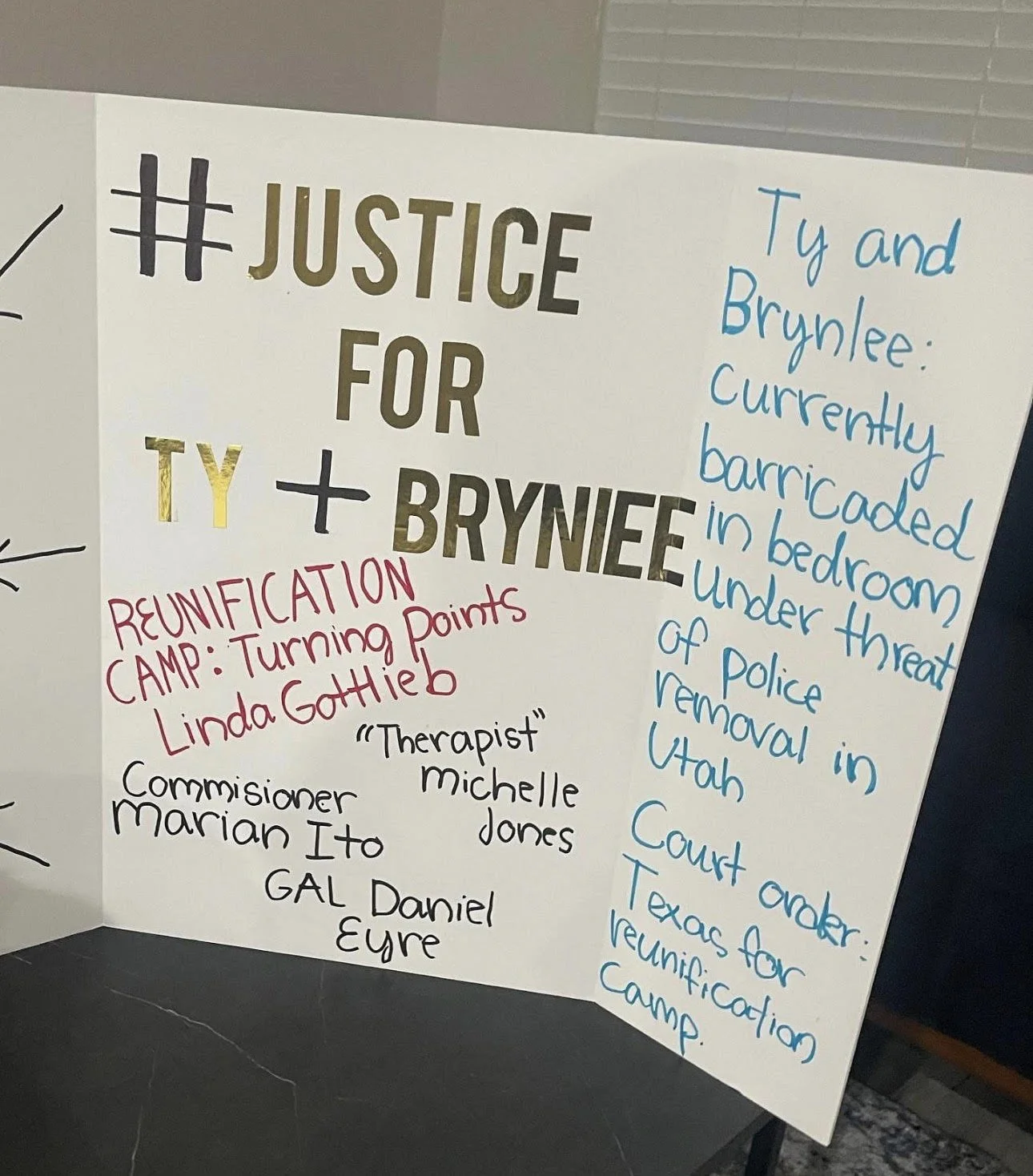
Review: The Nightmare Upstairs: What Happened to Ty and Bryn
When a documentary with real reach takes on a family court story, I pay attention. When it gets it catastrophically wrong, I cannot stay silent. Hulu’s The Nightmare Upstairs had every ingredient to become one of the most important documentaries ever made about the family court crisis in America. Instead, it handed the narrator’s chair to an invested party, left the reunification industry virtually untouched, and gave armchair warriors enough ambiguity to tear down two children who did everything right. This was not just a missed opportunity. It was a complete failure.

A Community Decision: The Future of One Mom's Battle
In February, I announced that I was stepping back from One Mom's Battle. What I did not know then was that a new development would emerge that changes everything and forces a decision I cannot make alone.

Mother’s Day is Complicated
Mother's Day is complicated for so many of us. For those who grew up without the mother the cards describe, for those who have been failed by a system that was supposed to protect them and their children, and for those who are quietly grieving something that was never there to lose. You are not alone in that. This post is for you.

Yellow Rock Communication in Family Court Cases
You should not have to carefully craft your words to communicate with someone who abused you. And yet, inside the family court system, how you communicate can significantly shape how a judge, guardian ad litem, or custody evaluator perceives you as a parent. This is where Yellow Rock comes in — a communication framework developed specifically for survivors navigating court-involved co-parenting with a narcissistic or high-conflict ex.

The Narcissist and a Blueprint
He had a blueprint. And I was never in it. If you have spent time in a high-conflict relationship wondering why the rules kept changing, why nothing you did was ever right, why he seemed to have a script you were never given, this post is for you. The blueprint does not disappear after separation. It relocates to the courtroom. And understanding that changes everything.

The Silencing of Survivors
In 2009, he stole my journals. I did not understand then, but I understand now, that the silencing of a family court survivor is rarely random. It is purposeful. It is strategic. It doesn't stop at the doors of the family court system.

Family Court Is Getting More Dangerous — What Newcomers Need to Understand
While we can all agree that family court reform is desperately needed, it is currently moving in a concerning direction. It is actively being reshaped, and those changes are not neutral nor are they child centric. Across the country, new legislation and the growing influence of special interest groups are altering custody outcomes in ways that increasingly place children and protective parents at risk.

What the Research Shows About Family Court, Reunification Therapy, and Why It Matters for Newcomers
For years, parents navigating family court have shared eerily similar experiences. Disbelief, minimization and outright denial of abuse. Pressure to cooperate at all costs. Children forced into unsafe contact. These stories are often dismissed as emotional, biased, or anecdotal. Academic research, legal scholarship, and investigative reporting show they are neither rare nor accidental.

Why Telling the Truth Is Not Enough When You Are Divorcing a Narcissist
Many parents enter family court believing that telling the truth will be enough. They assume that once abuse is disclosed, the system will respond appropriately. When that does not happen, the confusion can be devastating.

Post Separation Abuse and Abusive Communication
Why leaving an abusive relationship does not end the harm. Many survivors leave abusive relationships believing the hardest part is behind them.
What they often encounter instead is something far more disorienting and painful: post separation abuse.
Leaving does not always bring safety or peace. In many cases, the abuse simply changes form. The communication continues and often escalates. Emails, texts, court filings, financial threats, subtle accusations, and shifting narratives.

Family Court Is Changing — Why Strategy Matters More Than Ever
Family court no longer operates on fairness, honesty, or child safety. It has been reshaped by ideology, lobbying, and profit, leaving protective parents unprepared for a system that routinely reframes abuse, rewards false narratives, and punishes those trying to protect their children.

Staying “Out of Politics” Is a Privilege
Family court is political by design, not by accident. The laws, standards, and assumptions that guide custody decisions are created through policy, not neutrality. These choices determine whose voices are believed, how harm is defined, and whether children and survivors are protected or punished.

Starting 2026 With Purpose While Navigating Family Court With a Narcissist
January teaches survivors something that the rest of the year rarely allows: how to move with intention instead of urgency. It gives us a quieter month to reflect on what we have learned, how far we have come, and what our bodies have been forced to carry while navigating family court with a narcissist. The lessons of January are not meant to stay in January. They are meant to set the pace for the year ahead.

Why Stillness Feels Dangerous After Divorcing a Narcissist
We have been talking a lot this month about the inward season and what January invites us to do. After the chaos of December and the pressure of navigating family court with a narcissist, many survivors feel the pull to slow down, reflect, and turn inward. In theory that sounds peaceful. In reality, inward does not always feel safe. Stillness can feel unsettling when your life has required constant motion just to survive.

Divorcing a Narcissist and Reclaiming Your Pace After the Holidays
January arrives after the chaos of December…like a soft landing you cannot quite trust. Survivors who are divorcing a narcissist or navigating family court with a narcissist experience a crash after the holidays. The pace drops. The noise quiets. Your body tries to slow down, but your mind keeps sprinting. It is confusing, unsettling…and very common.