
Review: The Nightmare Upstairs: What Happened to Ty and Bryn
A Missed Opportunity and a Message to the Makers
After 15 years in the family court advocacy trenches, very little gives me hope anymore. One of the few things that does is media coverage. Not because the media always gets it right, but because sunlight is one of the only tools we have left. When a documentary with real reach takes on a family court story, I pay attention. When it gets it catastrophically wrong, I cannot stay silent.
Hulu's The Nightmare Upstairs: What Happened to Ty and Bryn had every ingredient to become one of the most important documentaries ever made about the family court crisis in America. The story of Ty and Bryn Larson is exactly the kind of case that exposes the full machinery of how the system fails children. Substantiated abuse. A parental alienation counterclaim. Profit-driven reunification programs. A barricade that made international headlines. The courage of two children willing to fight, on camera, in real time, for their own safety.
This was not just a missed opportunity. It was a complete failure.
I Was There
Three years ago, someone sent me Ty's initial video on TikTok. He was asking for help getting his story out. Giving voice to teenagers is a significant part of my advocacy work, particularly teenagers who face the threat of reunification camps and for-profit reunification schemes. I did what I always do: I dug in and reviewed the case.
What I found was damning. The allegations of abuse had been substantiated by CPS, labeled as chronic and severe. It is nearly impossible to get CPS to substantiate abuse claims, particularly in family court cases where bias runs deep and funding does not follow. When they do substantiate, we are obligated to pay attention.
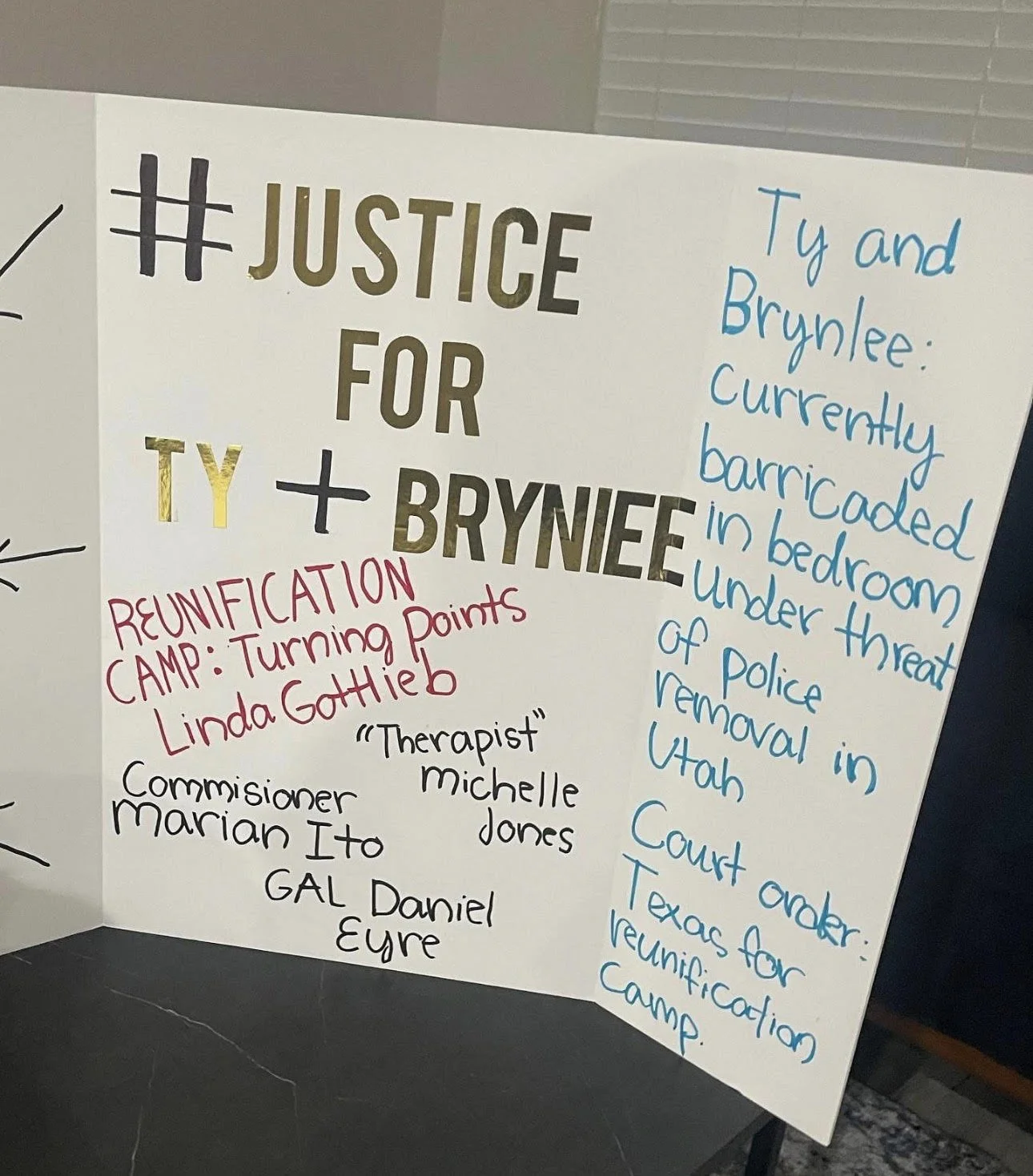
The documentary did not do Ty justice. This young man is exceptionally intelligent and articulate. He did not just react to what was happening. He understood it, at a level that many adults in this space struggle to reach, and he fought it strategically. His tenacity worked. His actions protected both him and his sister from being sent to Turning Points for Families in Texas, run by Loretta Maase, a branch of Turning Points of New York, run by Linda Gottlieb. These for-profit, experimental programs have been riddled with lawsuits, and exposed by the Wall Street Journal, ABC Nightline, and Business Insider, and have come under enough scrutiny that multiple states have passed legislation prohibiting judges from ordering children into them. Ty knew exactly what was waiting for him. He fought it with everything he had. This was the crux of the story, and it is another area where the documentary team failed.
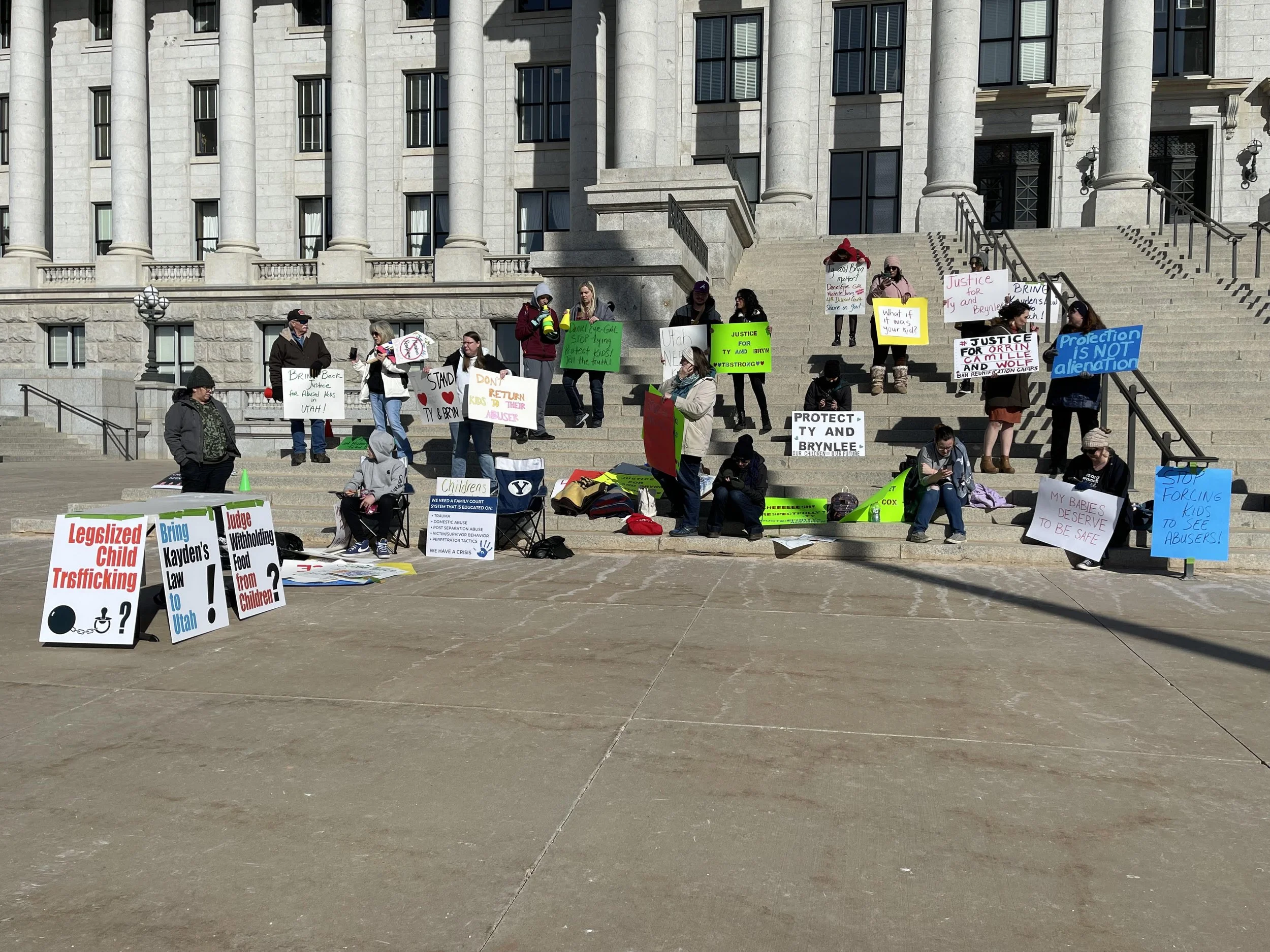
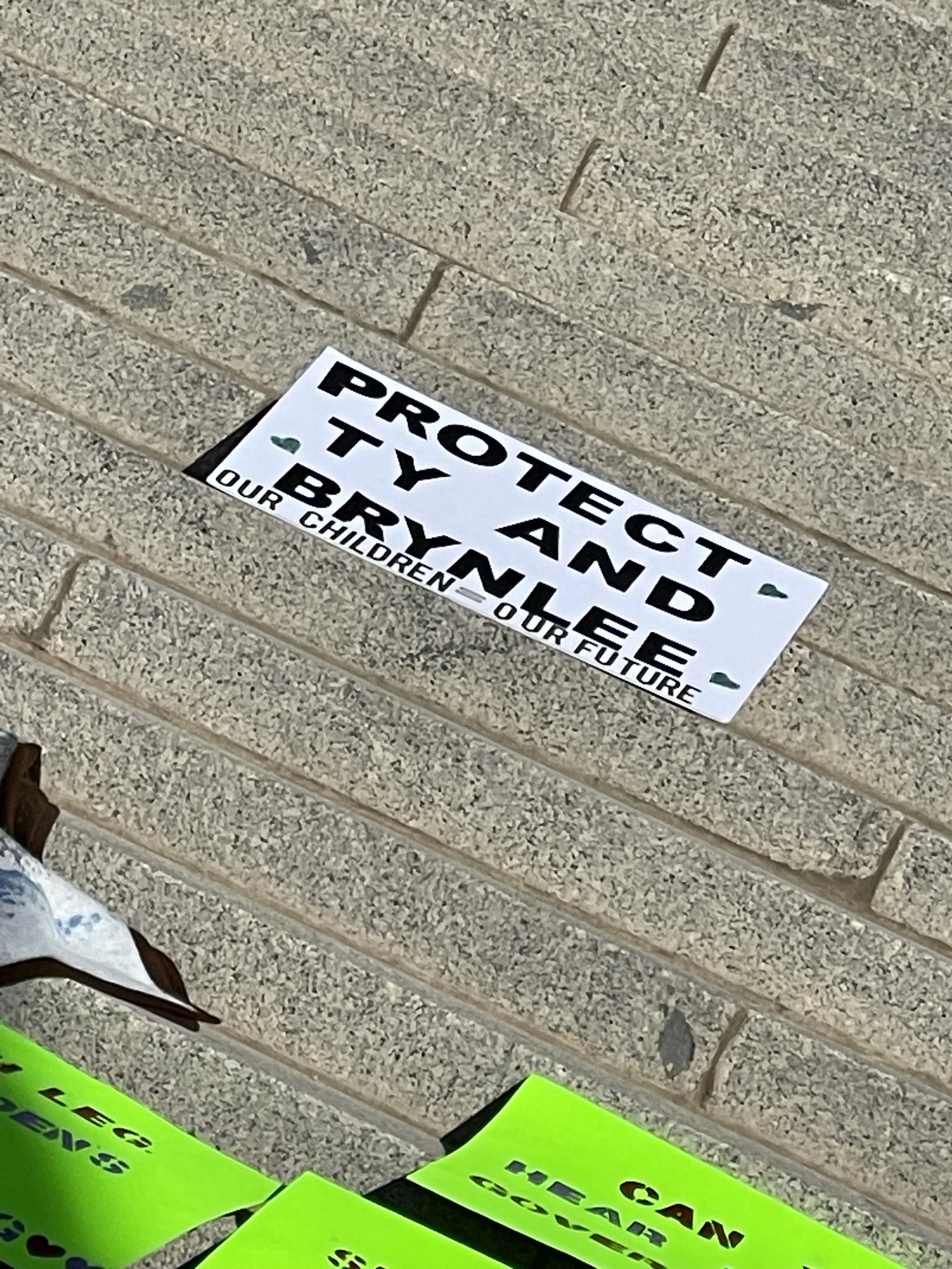
I know this because I was there. We joined many others in raising awareness of what was happening to these two children in Utah. We stayed up overnight, at their request, during their livestream to ensure that all eyes were watching. Cameras rolling meant transport agents or law enforcement were less likely to move in. I drove to Utah to participate in a rally at the Capitol. I used my platform because this was a powerful and textbook example of the family court crisis.
This is the playbook, and it runs in courtrooms across this country every single day:
Abuse allegations or findings
Counter-claim of parental alienation
Reunification profiteers circle the case, but only if the family has money. Apparently, lower-income families do not "alienate" their children.
Intensive reunification programs are ordered
Ty and Bryn were barricading because they knew exactly what was about to happen to them.
Where the Documentary Failed
I understand the argument for neutrality in documentary filmmaking. I genuinely do. There is a difference between balanced journalism and false equivalence. This documentary crossed that line, and it did so at the expense of two children who were already being failed by every institution designed to protect them.
The most glaring editorial choice was the amount of airtime given to the paternal grandmother. She became, functionally, the narrator of this story. This is not a neutral choice. It is a framework.
In many high-conflict cases, and, frankly, in my own story, there is a pattern that rarely gets examined. An overly involved, enabling mother-in-law who becomes the director of impression management, working overtime to protect the family image and keep the narrative clean and sparkly. These women are often sophisticated at shaping perception. Giving one the primary narrative role in a documentary about her son's children, who had substantiated abuse findings against their father, is not neutrality. It is capitulation to the very dynamic that causes so much harm.
I know this pattern intimately. My own ex-mother-in-law wrote a letter on behalf of her son, who is now serving nearly 300 years in prison for child sexual abuse. His youngest victim was 10 months old. In her letter, she argued that he should be allowed to wear an ankle monitor and build homes for Habitat for Humanity rather than serve prison time. She described what a wonderful poet he was. ASB class president. Life of the party. A true cowboy. That letter is the blueprint for how this dynamic operates: unwavering loyalty to the abuser, image above all else, and a complete erasure of the victims. When I see a mother-in-law handed the narrator's chair in a story about children who disclosed chronic and severe abuse, I know exactly what I am looking at.
Ty and Bryn were brave. They were credible. They should have been the center of this story from beginning to end. Instead, the documentary team handed significant framing power to an invested party whose interest was in protecting, not exposing, the very dynamic these children were fighting.
That is not journalism. That is exploitation.
A Substack article published this week by Grant Wyeth titled "The End of Responsibility" landed hard for me. Writing about a UK rape case where a judge cited the perpetrators' ADHD and anxiety as mitigating factors, Wyeth observed: "Empathy migrates away from those who need it the most and instead finds itself attached to those who don't deserve it at all." That sentence belongs in every family court in this country. It is a pattern I have watched play out. It is what Professor Joan Meier captured when she said, and I am paraphrasing, that it is easier to believe a child is being coached than to believe a child is being abused. The empathy goes to the parent making the alienation claim. The child disclosing abuse is the one who has to prove themselves. This documentary fell into the same trap. It extended grace and airtime to an invested party while two credible children with substantiated CPS findings were left to be picked apart by strangers on the internet.
What Was Missing
The documentary barely scratched the surface of the reunification industry, which is arguably the most important part of this story. Why were these children so afraid to come out of barricade? Because of what the court had ordered for them; an "intensive reunification program." An unregulated, for-profit industry that courts order with little scrutiny and children endure with no recourse.
If you want to understand what Ty and Bryn were actually facing, I urge you to watch a 15-minute documentary that did this with journalistic integrity. Olivia Gentile's investigation, produced in partnership with Retro Report and Business Insider, is titled The Truth Behind the Experimental Therapy That Kids Say Starts With 'Legalized Kidnapping'. In under 15 minutes, Gentile's team managed to illuminate what the Hulu production could not in multiple episodes: the mechanism, the harm, and the human cost of court-ordered reunification programs built on a theory that much of the scientific community does not recognize.
That is the story. The system that made these children afraid. The industry that profits from that fear. The court that ordered them into it.
The Hulu documentary asked viewers to wonder what happened to Ty and Bryn. Gentile's investigation answers the more important question: why it keeps happening to children everywhere.
The Last Thing We Need Is Division
The family court advocacy space is not without its fractures. We do not always agree but we share a common goal: educating the public, protecting children, and pushing for a system that is trauma-informed. A documentary with this kind of reach had an extraordinary opportunity to move that needle. To bring clarity to a general public that still does not fully understand how parental alienation theory is weaponized, how reunification programs profit from court orders, or how children with substantiated abuse findings can still end up being sent to live with their abuser.
Instead, this documentary muddied the water. It left enough ambiguity, enough unanswered questions, and enough airtime for invested parties that it has become an open invitation for armchair warriors to pile on. To tear down this family. To tear down these children. To debate whether Ty and Bryn are credible, whether their mother is to blame, whether the whole thing was manufactured. That is not discourse. That is further abuse. And a documentary team with the resources and access they had should have known better.
There were facts left out. There was context left out. This was not a story that warranted this degree of false neutrality. Not with CPS substantiation on the record. Not with the reunification industry waiting in the wings. Not with two children who had already been failed, repeatedly, by every institution designed to protect them.
To the Survivors Watching
If you watched this documentary and felt like something was off, you were right. You found yourself angry, I stand with you. Your instincts are sound.
We are in a family court system that is not trauma-informed. We are in a system where parental rights routinely trump a child's right to safety. We are in a system where the people who speak loudest, most confidently, and with the most resources often shape the narrative.
These children did everything right. They disclosed. They were believed by CPS. They asked for help. The system failed them at every turn.
A documentary team that had full access to their vulnerabilities and their story, to CPS records indicating chronic and severe substantiated abuse, and to the broader context of the reunification industry chose, instead, to give the microphone to the grandmother.
That choice matters. It sends a message to every survivor, every teenager fighting for their own safety, and every advocate watching: that even when the cameras show up, you are not guaranteed to be heard.
I believe Ty and Bryn. I believed them then. I believe them now.
The documentary had an opportunity to do the same. It did not.
Tina Swithin is the founder of One Mom's Battle and the High Conflict Divorce Coach Certification Program, and the author of the Divorcing a Narcissist book series. For over 15 years, she has been an advocate for survivors navigating family court and post-separation abuse. She can be found at onemomsbattle.com.
